
Lead
Hi, I’m Pomarano.
On this blog I mostly write about learning AI, but today I’m posting in the Daily life category about a snack I keep buying lately. It’s “Fu-chan” from Shikishima (labeled fukashi on the package — wheat-gluten sweets).
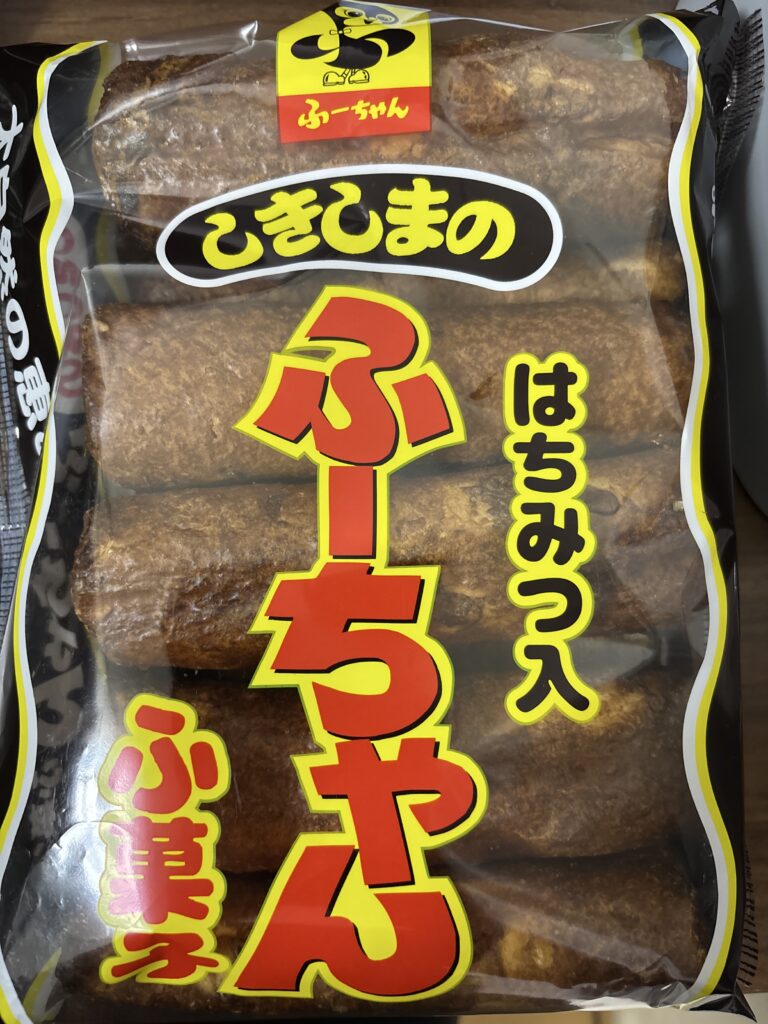
It’s sweet and tasty, yet light enough to feel somewhat wholesome, so it works well as a small treat on busy days. Whenever I see it at the supermarket, it ends up in my cart. Taste is personal, of course, but I hope this helps if you’re looking for an easy Japanese snack.
- The post about why I restarted this blog (Japanese): here
What is “Fu-chan”?
What I eat most often is Fu-chan, a type of fukashi (a snack made mainly from wheat gluten).
Packages often say ふ菓子 (fukashi). I remember the name as “Fu-chan.”
It’s made by Shikishima, with honey and a brown-sugar-style sweetness. The sticks are long and thin. One bite is light and crisp, with a gentle sweetness like brown sugar and honey — more of a tea-time snack than a heavy chip or cookie.
Personally, I find it sweet and delicious, and the light texture gives a healthier impression, so I don’t feel as guilty (still a sugary snack — easy to overeat).
What fukashi is made of, and how Fu-chan is made
I wondered what it’s made of, so I checked the package and read a bit about fukashi in general. I’m not an expert — the label on your bag is the most accurate source. This section is my notes.
What goes into fukashi
Fukashi (麩菓子) is, as the name suggests, a snack whose main ingredient is fu (wheat gluten), which comes from wheat flour. It’s different from the white fu cubes you might know from Japanese soup.
Classic dagashi-style fukashi is often described as long gluten sticks soaked with sugar, candy syrup, brown sugar, and similar sweeteners (Fukashi — Wikipedia (Japanese)).
Example ingredients listed on Fu-chan packages (wording may vary by product):
- Processed brown sugar
- Wheat flour
- Wheat protein
- Honey
- Starch syrup, etc.
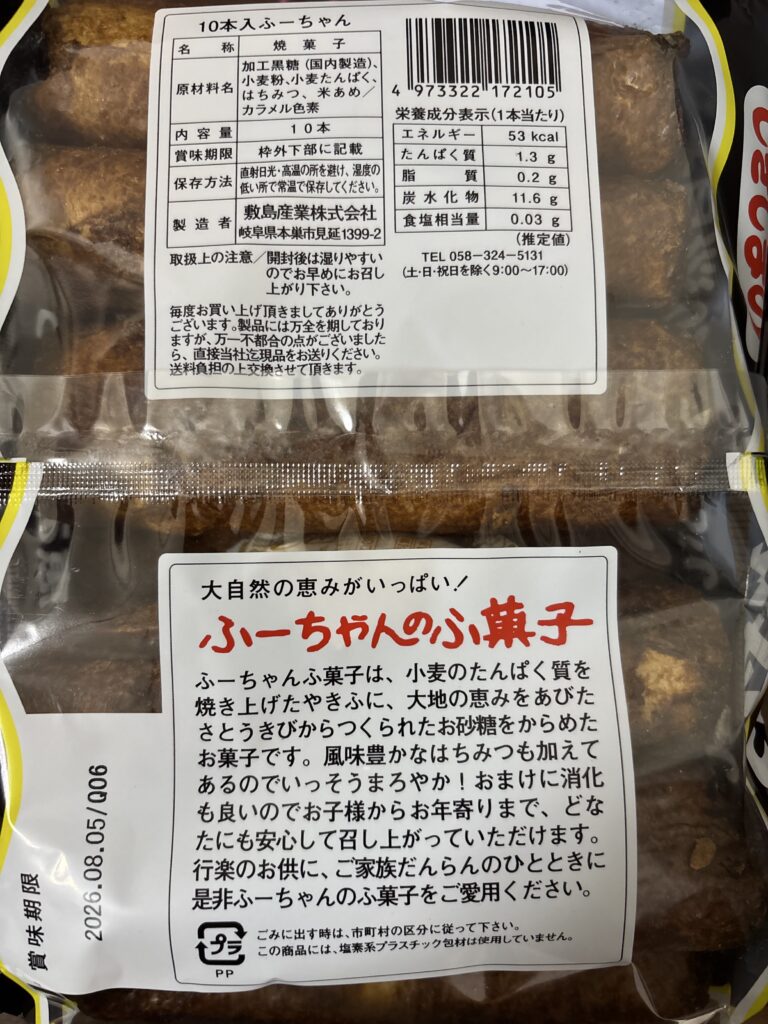
Wheat is a common allergen. Some versions contain honey — check the package regarding infants and young children.
How it’s made — watch the official video
I haven’t toured the factory, so for the actual production steps, the clearest source is Shikishima’s official video:
▼ How “Fu-chan” fukashi is made (Shikishima industry — official YouTube)
The video follows the process at their plant in Motosu, Gifu — from wheat protein (fu) to packaged fukashi. Watching it alongside the ingredient list on the bag, these steps are easy to follow:
- Stretching the fu dough and shaping it into long sticks
- Coating with brown sugar, honey, starch syrup, and similar sweeteners
- Baking and drying until you get that light, crisp texture before bagging
It’s the kind of snack that’s a bit more fun to eat once you’ve seen how it’s made.
- For exact ingredients and manufacturing details, see the ingredient list on your package. Video: Shikishima official channel.
Why I keep buying it
I got into it after I started seeing it at various supermarkets. I don’t need a specialty shop — I can grab it during regular shopping.
- Easy — open the bag and eat
- Sweet — a small mood lift after work or when I’m tired
- Light texture — easier to reach for than heavy snacks
- Buy on sight — if it’s in stock, it often goes in the cart again
My blog tagline is Better not to be idle (暇じゃないほうがいい). When life is busy, a quick snack that satisfies is honestly welcome.
When and how I eat it
Where I buy: no single store — whatever supermarket has it when I’m shopping. Availability varies by area and chain, so check near you when you shop.
When I eat it:
- After work or focused tasks, as a short break
- With tea or coffee
- When I’m a little hungry but don’t want a big meal
Some bags have individually wrapped sticks. My rule is close the bag so I don’t munch through it all at once.
Summary
Lately my go-to snack is Fu-chan (fukashi) — sweet, tasty, light, and easy to find at supermarkets. It’s not fancy gourmet food; more of an everyday treat.
I’ll probably buy it again when I see it. If you’re looking for something similar, or you like retro Japanese snacks, it might be worth a try.

コメント